Late winter is the BEST time for a nature walk. Here's why
Did you know some plants look their best while they're dormant? A late winter garden walk could surprise you with more color and beauty than you'd expect
More Stories


The cold has a reputation of keeping people inside during the winter months. Add all the snow we've seen this winter, and it might be hard to imagine that there is still so much life and beauty in the winter landscape.
Winter garden walks have so many benefits for us. Studies show that a few minutes outside is good for elevating our mood especially when combined with some movement. In addition to that, New York state parks have no parking fees and are less crowded than the busy spring, summer and autumn months.
This week, I visited Planting Fields in Oyster Bay - where a garden walk anytime of the year is filled with exciting finds. Rebecca Slagle is the sustainability coordinator at Planting Fields Foundation and helped guide me to some of her favorite plants in the garden.
The best time of the year for bark
The bark and structure of trees is so under appreciated, especially exfoliating trees such as birch and sycamore. The outer layer of the bark peels, revealing a patchwork of incredible textures. The white color glows against the blue winter sky.
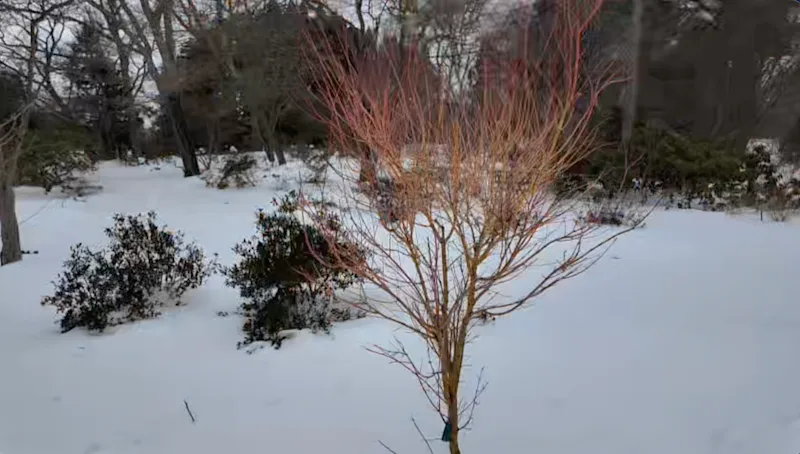
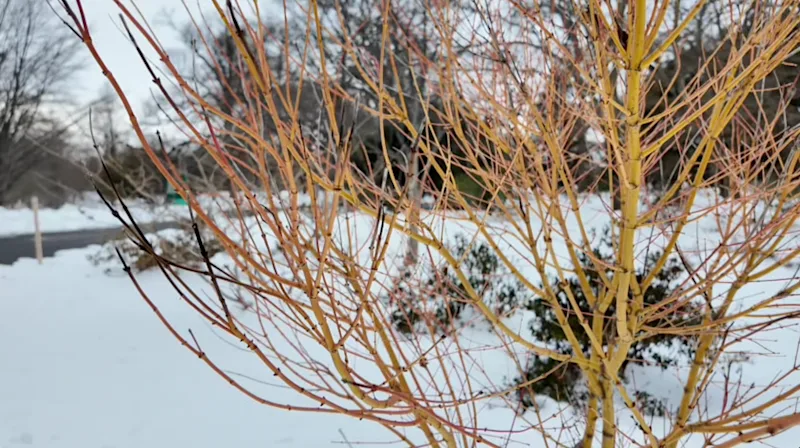
Some bark is incredibly colorful during the winter. We looked at a colorful coral bark Japanese maple. The older bark on the bottom of the tree is a bright yellow. Thin and new branches are orange and red. The colors especially pop against a snowy backdrop. A native alternative is Cornus sericea 'Flaviramea," also known as yellow twig dogwood. Native plants encourage more wildlife. With so many birds returning in February, it's a good habit to have native plants around.
Sounds are clearer
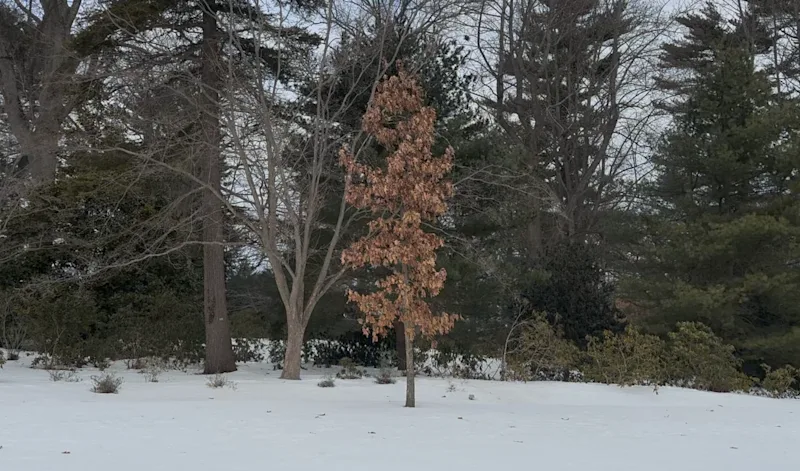
Speaking of birds, the lack of leaves on the trees and the snow cover on the ground actually gives sound the ability to travel farther in the winter time. It also tends to be a very quiet time of the year, so there is less background noise from swaying leaves and loud insects. You may even hear some dead leaves rattling on branches. Some trees like our native live oaks retain their dead leaves all winter long. It's called marcescence. Scientists believe they do this to make their branches less attractive for hungry animals like deer to eat them. Those dead leaves are loud, and deer don't want to be the loudest thing in a quiet forest.
Are you going on winter walks?
Without foliage blocking the view, bark becomes a standout feature: birch trees glow pale against snow, sycamores show their distinctive mottled trunks, and native dogwoods offer subtle color that brightens gray days. Beyond visual appeal, winter walks support mental well-being, encourage seasonal awareness, and highlight wildlife activity often missed in warmer months. Best of all, you won't be swatting at any mosquitoes or checking for ticks!